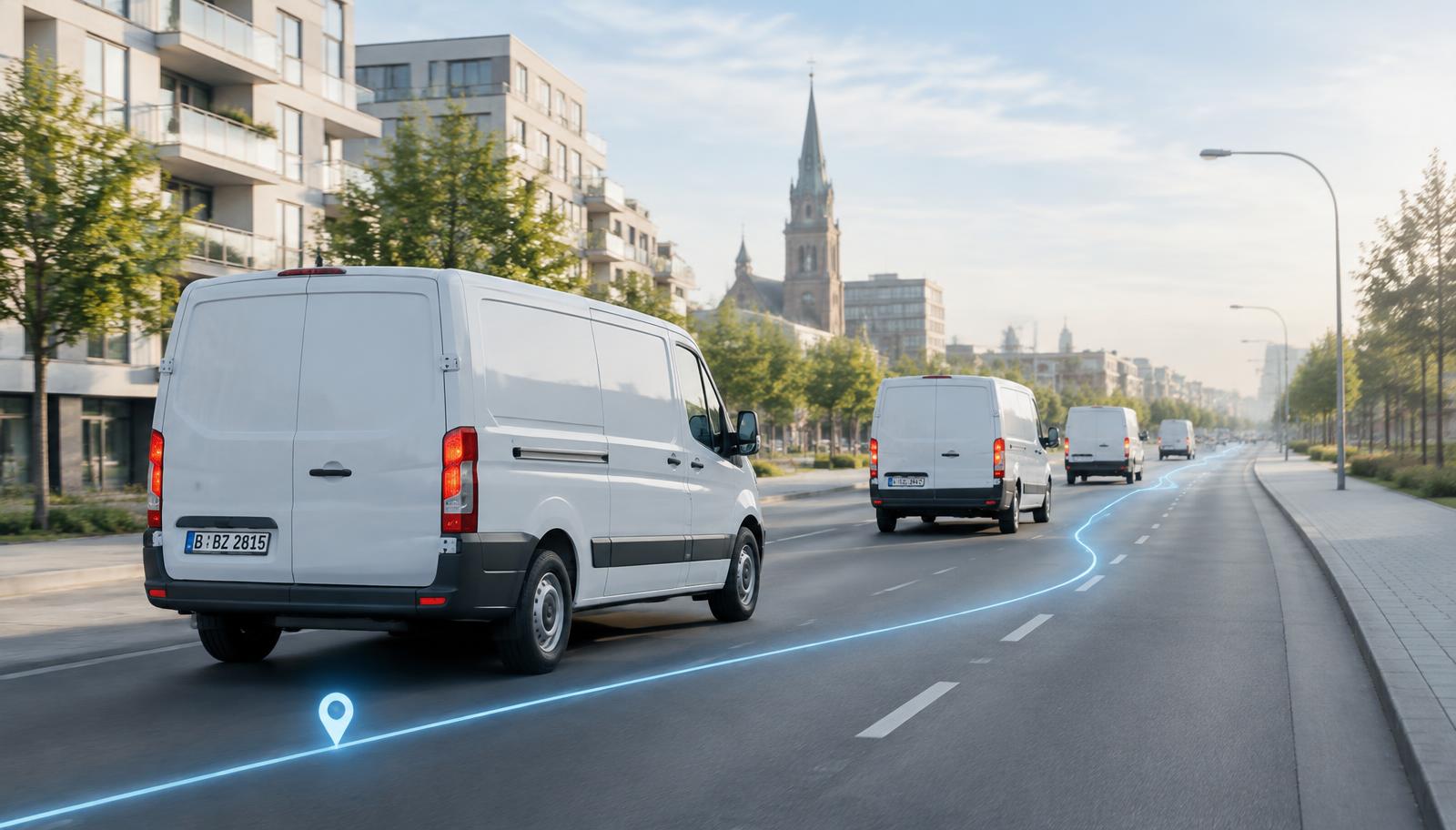
What GPS fleet management actually does
Every tracked vehicle sends its position at regular intervals while it is moving. The platform turns those positions into a live map, a history of each journey and a set of reports. Most fleet trackers also read ignition status, and many can read engine data through the vehicle's diagnostic port or CAN bus.
The value does not come from the dot on the map. It comes from what the business does with the data: dispatch decisions, conversations with drivers, servicing plans and accurate records for customers.
The five main areas of improvement
Route optimisation
Comparing planned routes with what really happened shows detours, repeat trips and poor job ordering. See our guide to route optimisation for the detail.
Fuel efficiency
Idling time, harsh acceleration, speeding and unnecessary mileage are the usual causes of waste. Tracking makes each of them visible and measurable.
Driver behaviour
Harsh braking, cornering and speed events can be scored per driver, which gives managers a fair, evidence-based basis for coaching rather than guesswork.
Maintenance scheduling
Recorded mileage and engine hours let you service vehicles on actual use rather than on calendar estimates.
Safety and response
Knowing where every vehicle is means faster help after a breakdown or incident and better support for lone drivers.
How to roll out fleet tracking well
- Start with a clear goal, such as reducing idling or improving arrival-time accuracy, so you can judge success.
- Tell drivers what is tracked, when and why before devices are fitted. Write it into a policy.
- Choose hardware to match the vehicles: OBD-II plug-in units for light vehicles, hardwired units for vans, trucks and plant.
- Set up a small number of useful alerts first. Too many alerts are quickly ignored.
- Review reports on a regular schedule and act on them. Data that nobody reads saves nothing.
Legal and privacy points to plan for
In most countries, including the UK and those in the EU, location data about an identifiable driver is personal data. You need a lawful basis, a clear policy and proportionate settings, such as a private mode outside working hours for vehicles taken home. Our article on legal considerations for workplace tracking covers this in more depth.
Frequently asked questions
Do I need special vehicles for GPS fleet tracking?
No. Trackers can be fitted to almost any vehicle with a 12V or 24V electrical system, and battery-powered units cover trailers and unpowered equipment.
Can drivers see their own data?
Many businesses share driving scores with drivers. It tends to improve acceptance and encourages self-correction.