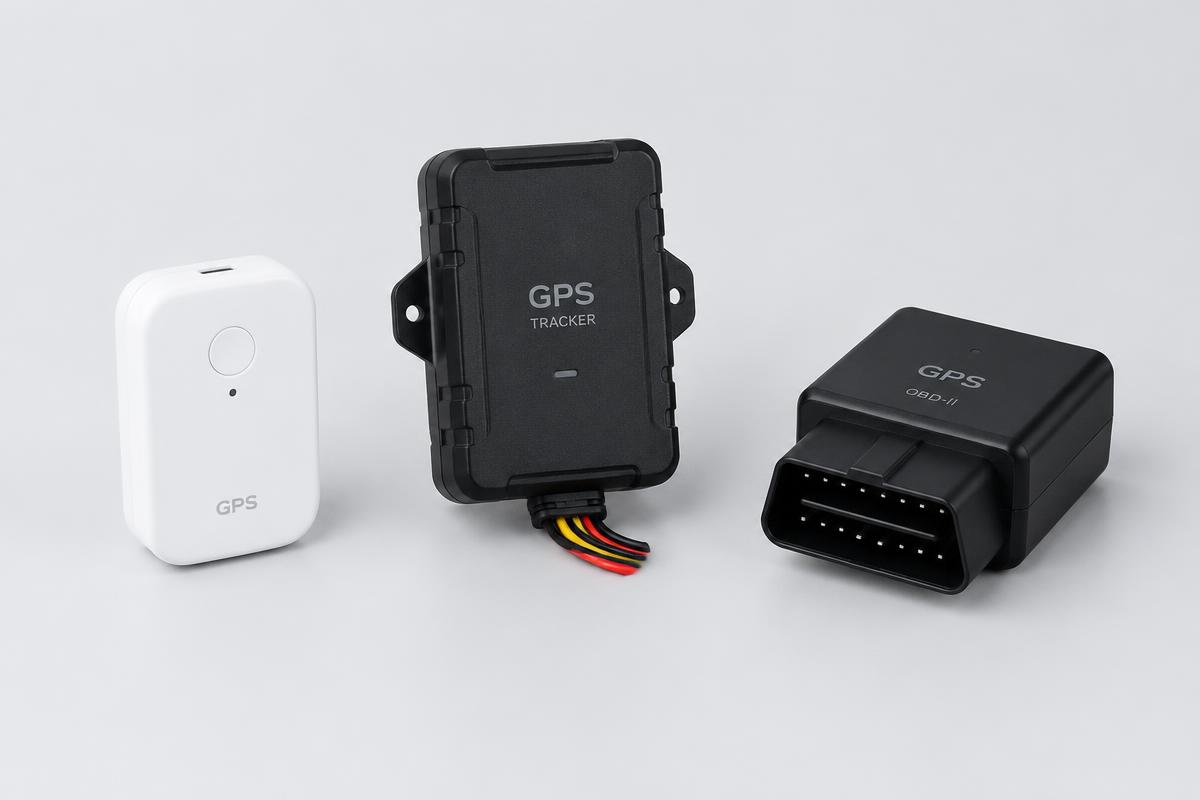
What GPS tracking is
GPS (Global Positioning System) is one of several satellite navigation systems, known together as GNSS. A tracker receives signals from several satellites, calculates its position, and then sends it over a mobile network to a server. You can then see it on a map.
How it works, in brief
- Satellites broadcast precise time signals
- The tracker measures signals from at least four satellites to calculate its position
- The tracker sends the position, time and speed over a mobile network
- The platform stores the data and shows maps, history, alerts and reports
Benefits
| For | Main benefits |
|---|---|
| Businesses with vehicles | Dispatch, fuel savings, driver safety, proof of service |
| Equipment owners | Theft deterrence, recovery, utilisation, billing |
| Individuals and families | Peace of mind, SOS alerts, vehicle security |
Types of tracker
Plug-in (OBD-II)
Fits into a vehicle's diagnostic port in seconds.
Hardwired
Permanently connected to vehicle power; hidden and tamper resistant.
Battery asset trackers
Self-powered units for trailers, containers and equipment.
Personal trackers
Wearable or pocket devices with SOS buttons.
Applications
The three main uses are fleet management, asset tracking and personal safety. Many organisations use more than one, for example vans and the plant they tow.
How to choose a system
- Define what you want to improve and how you will measure it
- List what you need to track and how it is powered
- Check coverage where you operate
- Compare total monthly cost, contract terms and support
- Ask for a demo using your own scenario
- Check how data protection is handled
Accuracy and limitations
Consumer and commercial GPS is typically accurate to within a few metres outdoors with a clear view of the sky. Accuracy drops indoors, in tunnels and among tall buildings. Our accuracy guide explains why.
Frequently asked questions
Does GPS tracking work without mobile signal?
The device can still calculate its position, but it cannot send it. Most trackers store positions and send them when signal returns.
Is GPS tracking legal?
Tracking your own vehicles and assets is generally lawful. Tracking people requires transparency and a lawful basis. See our legal considerations guide.